is often the first clue.
Symptoms, risk, screening and diagnostic confirmation
Detect Leukemia is about choosing the right test for the right risk.
A leukemia detection guide covering abnormal CBC, bruising, infection, fatigue, blood film, flow cytometry, bone marrow biopsy and molecular genetics.
blasts or abnormal cells change urgency.
confirms acute leukemia and many chronic cases.
cytogenetics and mutations guide prognosis and treatment.
Brief outline
What leukemia means.
Leukemia usually begins in blood-forming cells. Acute leukemias can become dangerous quickly; chronic leukemias may be found incidentally on routine blood tests.
Detection frame
Screening is for people without symptoms. Diagnosis is for symptoms, abnormal examination, family history, imaging findings or abnormal labs. The same test can be sensible in one setting and misleading in another.
Do not ignore
Symptoms and signs not to ignore.
Risk and genetics
Demographics, risks and genetics.
Screening
Who should actually be screened?
There is no routine leukemia screening program for average-risk adults. CBC abnormalities or symptoms drive diagnosis.
CBC with differential
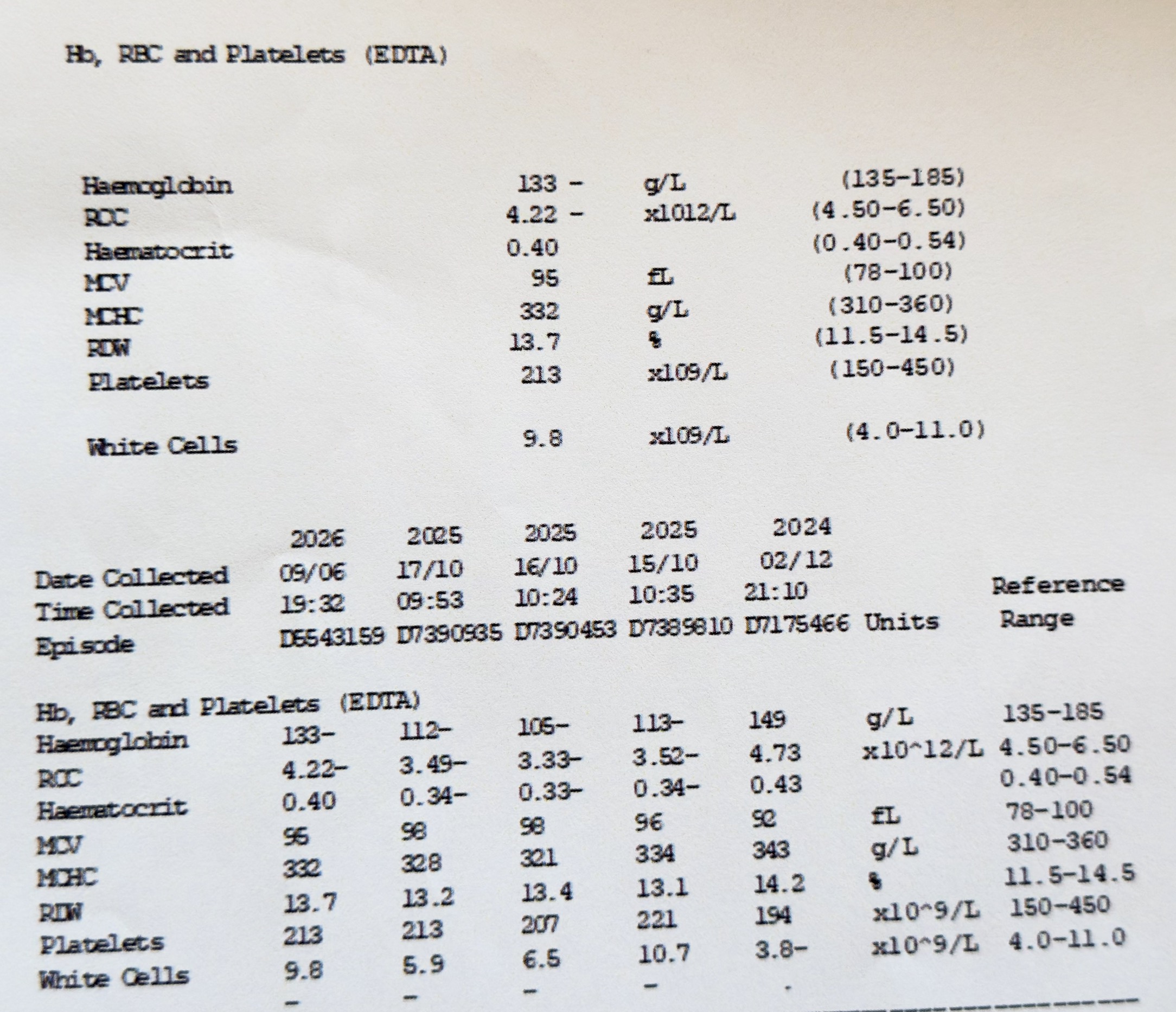
Looks for anemia, thrombocytopenia, high/low white cells and blasts.
Blood film
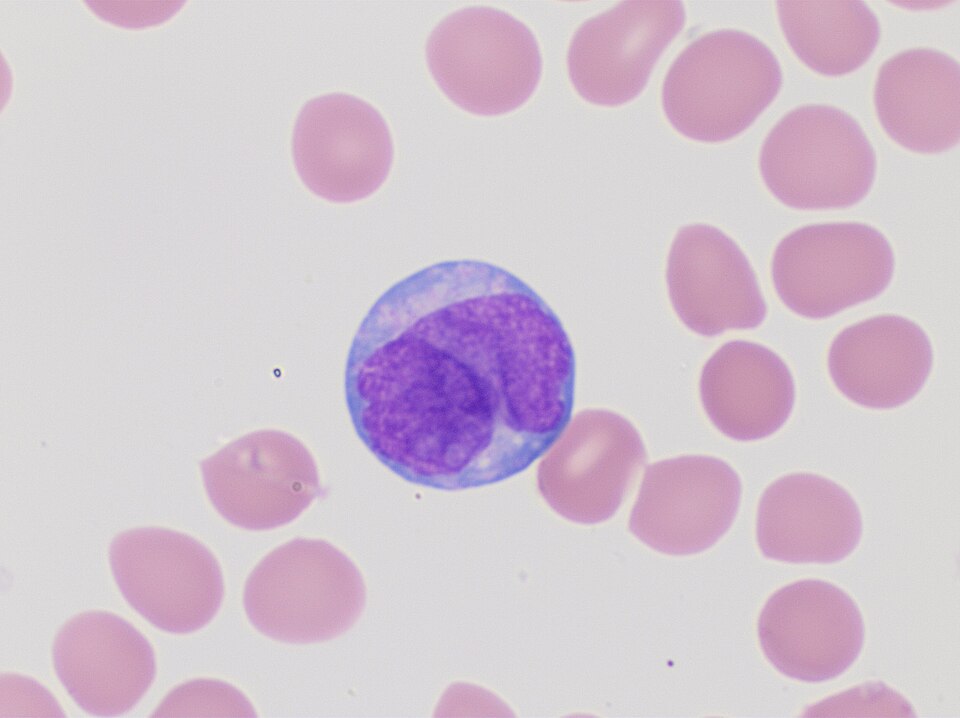
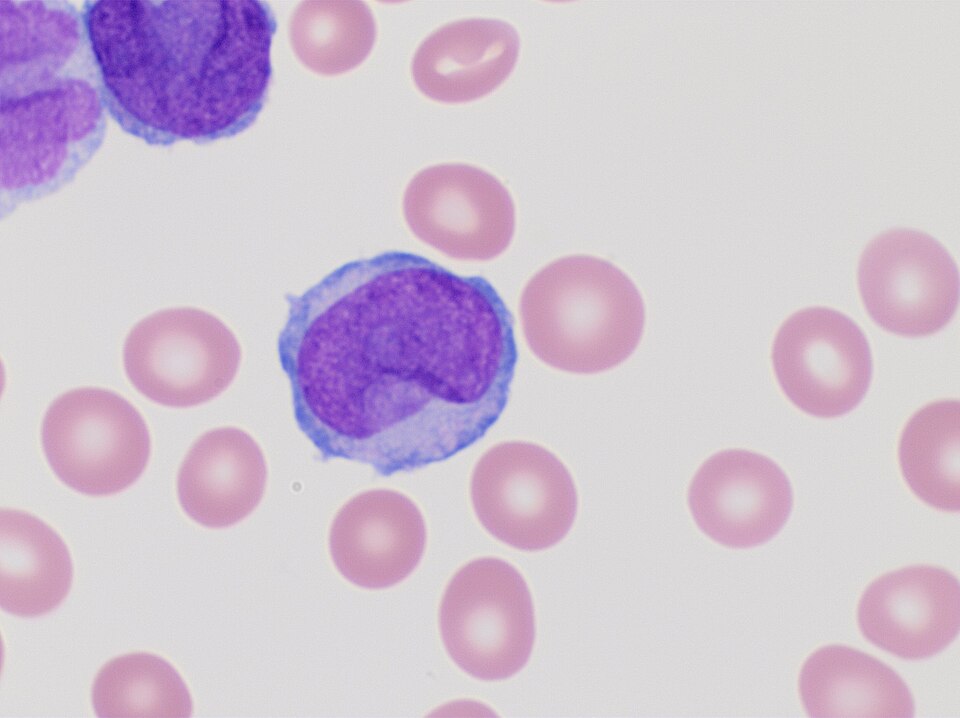
Can show blasts, Auer rods or chronic leukemia patterns.
Flow cytometry
Classifies acute leukemia and lymphoid/myeloid lineage.
Bone marrow biopsy
Defines marrow involvement, morphology and blast percentage.
Cytogenetics/FISH/NGS
BCR-ABL, PML-RARA, FLT3, NPM1 and many others change care.
Screening blood panels
A normal CBC does not explain persistent symptoms; abnormal results need context.
Images, labs and tissue
Useful tests and what they can miss.
Detection usually needs a chain: suspicion, imaging or lab triage, tissue or cytology when needed, then pathology and molecular testing where it changes management.
Pros, cons and controversy
Benefits, harms and the false-positive problem.
Routine blood tests can catch leukemia, but broad extra testing without symptoms can create anxiety from borderline counts. Acute leukemia symptoms or blasts are not a watch-and-wait issue.
Sources and trials